Problem Solving in Engineering
During the course labs as well as the EE1L1 project, you develop a wide range of essential skills namely, communication skills, mathematical calculation skills, self-management and competitive skills, team and cooperative skills, and last but not least problem solving skills.
What is Problem Solving?
Problem solving is the process of finding workable solutions to challenges by applying what you already know to new, unfamiliar situations.
High School vs. University Problem Solving
High School Approach:
Problems typically come directly from textbooks with routine, predictable formats
Solutions follow a prescriptive approach: apply a given formula or operation to the provided numbers
The method to solve the problem is usually clear from the start
University Approach:
You’ll encounter complex mathematical and engineering problems without obvious solutions
You must actively analyze the problem and decide which techniques or formulations to use
Success requires critical thinking and decision-making skills, not just formula application
The Goal of Problem Solving
The primary aim of problem solving in your engineering education is to:
Develop your ability to systematically approach unfamiliar challenges
Give you opportunities to discover solutions independently
Build confidence in finding proper solutions through your own reasoning and analysis
What This Means for You
As you work through this project, remember that you’re expected to:
Think critically about each problem you encounter
Explore different approaches before settling on a solution method
Learn from the process of discovery, not just from getting the right answer
Problem Solving Methodology
In Section 1.8 of Alexander & Sadiku (2017), the six essential steps for problem solving, that are shown in Figure 1, are given as follows:
Carefully define the problem.
Present everything you know about the problem.
Establish a set of alternative solutions and determine the one that promises the greatest likelihood of success.
Attempt a problem solution.
Evaluate the solution and check for accuracy.
Has the problem been solved satisfactorily? If so, present the solution; if not, then return to step 3 and continue through the process again.
For Step (3), you can ask the tutor of your group in the lab to provide you with some guidelines regarding the development of such strategies and/or alternative solutions for the assignments.
Nevertheless, bear in mind that there is no single problem solving process and typically there are several supporting processes that exist in parallel Lee (2011)Picus (1983).
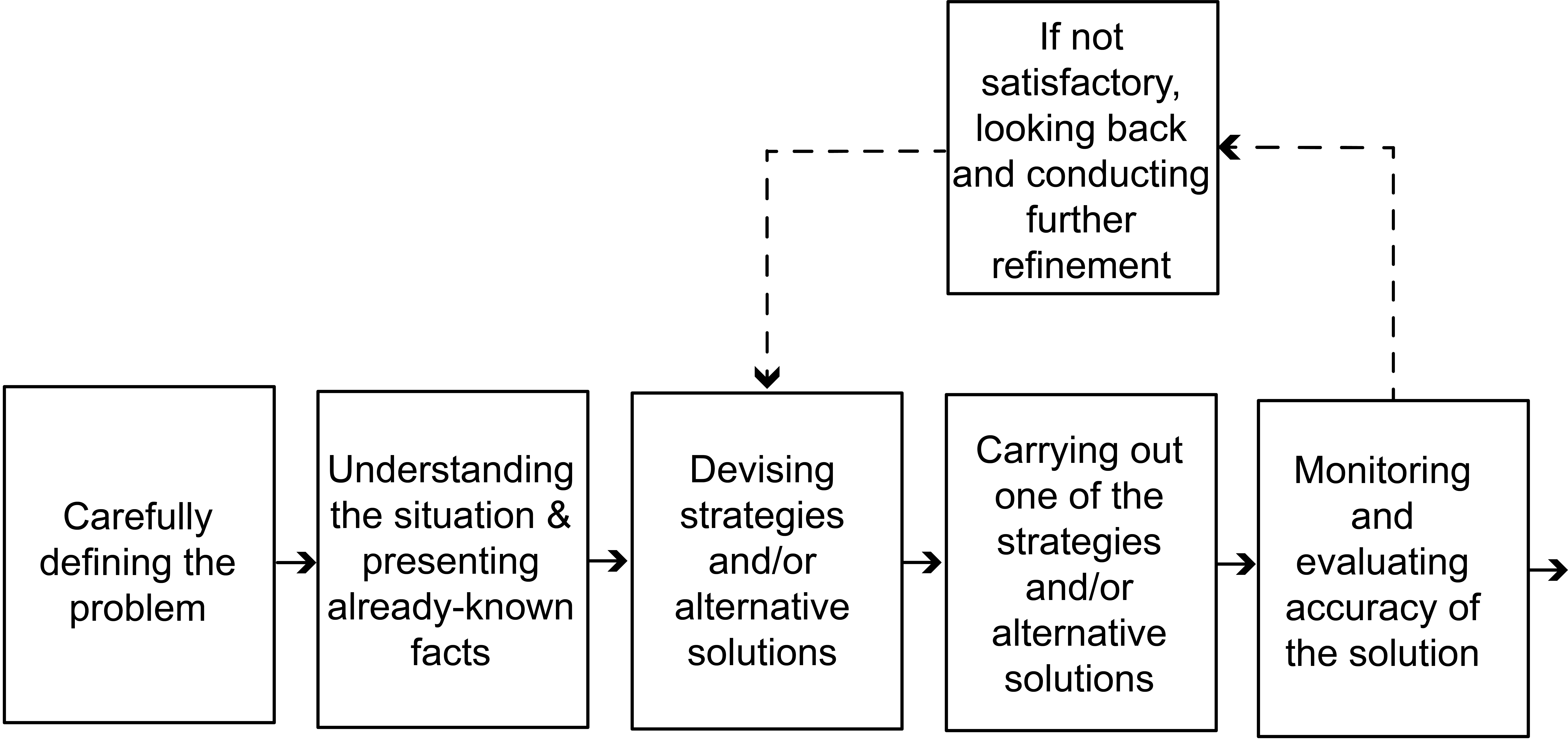
Figure 1:Six essential steps for problem solving Alexander & Sadiku (2017)
- Alexander, C. K., & Sadiku, M. N. O. (2017). Fundamentals of Electric Circuits. McGraw-Hill.
- Lee, S. W. F. (2011). Cognitive process mapping: Adapting cognitive task analysis to research and educational assessment of young children’s thinking skills in the classroom [PhD Thesis]. University of Otago.
- Picus, L. (1983). Teaching Problem Solving: A Research Synthesis. 1–35.